
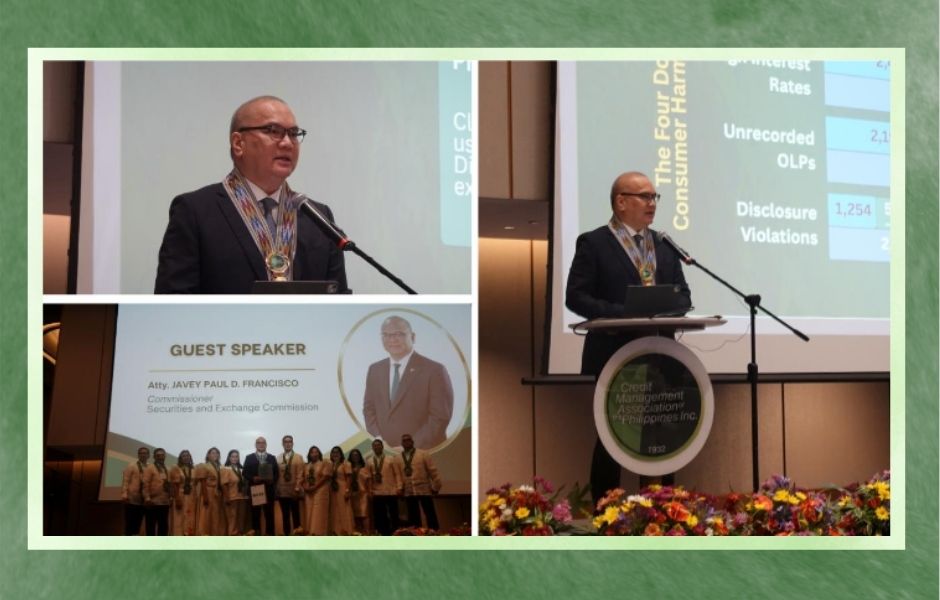
Image via Securities and Exchange Commission (SEC).
SEC Strengthens Oversight of Digital Lending in the Philippines as Industry Risks Emerge
MANILA, Philippines — The Securities and Exchange Commission (SEC) is advancing a more proactive approach to regulating the country’s rapidly expanding digital lending sector, as concerns grow over consumer protection, transparency, and market conduct.
The regulator is currently developing a preventive framework for online lending platforms, aimed at strengthening oversight while ensuring that innovation in financial services remains aligned with governance standards. The move reflects broader developments in the Philippine financial landscape, where mobile-based lending solutions have gained traction among consumers seeking faster and more accessible credit options.
Speaking at the 44th National Credit Congress in Pasay City, SEC Commissioner Javey Paul D. Francisco cited a noticeable increase in complaints linked to lending activities, particularly within the digital space. These concerns often involve unregistered operators, reports of aggressive or unfair collection practices, questions surrounding interest rates, and gaps in the disclosure of loan terms.
The commissioner noted that while digital lending has expanded financial access, the presence of non-compliant platforms has created challenges in maintaining consumer trust. At the same time, regulators and industry participants continue to distinguish between unauthorized entities and registered lending companies that operate under SEC supervision. Platforms such as MocaMoca, operated by Copperstone Lending Inc., are among those that fall within the regulatory framework and are subject to compliance, reporting, and consumer protection requirements.
The SEC’s proposed guidelines are expected to introduce more structured entry requirements for online lending providers, while reinforcing accountability at the platform level. These measures are designed to ensure that lending companies adhere to clear standards in terms of registration, disclosure practices, data governance, and borrower interaction. By embedding conduct expectations directly into operations, the framework aims to reduce harmful practices while supporting responsible industry players.
Francisco emphasized that lenders cannot shift responsibility to third-party service providers, particularly in areas involving customer communication and loan servicing. Instead, companies are expected to maintain full accountability across all aspects of their operations, including those managed through outsourced arrangements. This approach is intended to strengthen oversight and prevent gaps in responsibility that may affect consumers.
“Digital lending has the potential to expand access and drive growth, but without strong governance, it can undermine the very trust that sustains the credit system,” Francisco said.
The growth of digital lending in the Philippines has been closely linked to ongoing efforts to improve financial inclusion. With a significant portion of the population still underserved by traditional banking institutions, online lending platforms have provided alternative channels for short-term financing. However, regulators have emphasized that the long-term sustainability of the sector depends on maintaining a balance between accessibility and consumer protection.
Discussions during the National Credit Congress highlighted the importance of clear regulatory direction, responsible lending practices, and transparent communication with borrowers. Stakeholders pointed to the need for a more consistent framework that supports both innovation and accountability, particularly as the digital credit ecosystem continues to evolve.
As the SEC moves forward with its proposed regulatory measures, the direction signals a shift toward preventive oversight, where risks are addressed early rather than after issues arise. For borrowers, this may translate into greater clarity and protection. For compliant lending companies, it offers an opportunity to reinforce credibility in a market that is becoming increasingly competitive and closely monitored.
The digital lending sector in the Philippines now stands at a critical juncture. As regulatory frameworks continue to develop, the emphasis remains on ensuring that growth is supported not only by technological innovation but also by transparency, accountability, and trust.
Source: Securities and Exchange Commission